How to use Christella VoiceUp
Take the voice assessment first, then work through Stage 1’s lessons in order for about ten minutes a day. Repeat the assessment at each new stage to see how your voice is changing.
New to it? What Christella VoiceUp is, and who it is for.
How do I get started?
- Take the assessment. You read a passage aloud and then speak freely, and the app measures your average pitch for each.
- Answer the questionnaire if you would like to. It is optional, and it records how you feel about your voice now, to compare with later.
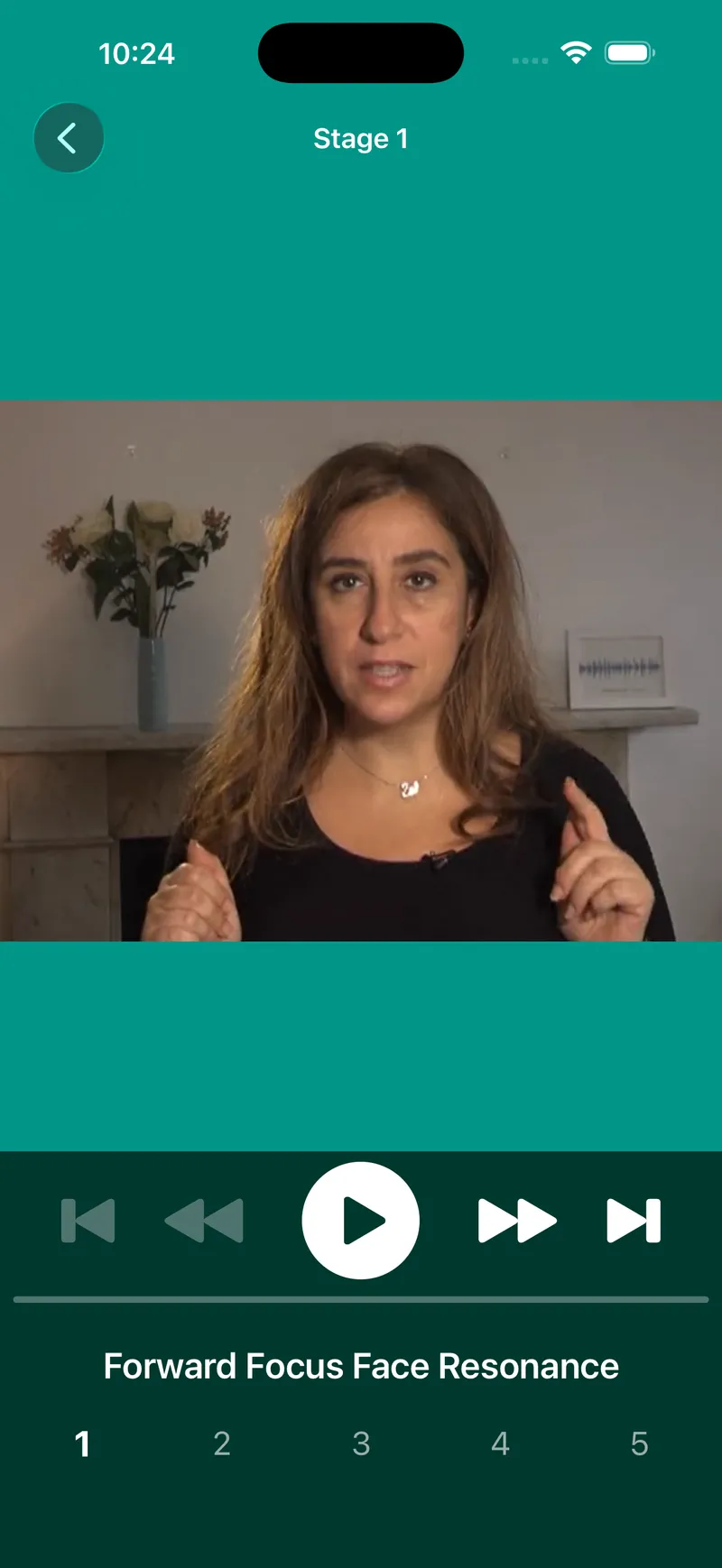
- Start Stage 1’s lessons, in order. Each is a video of Christella teaching it, followed by phrases to hear and then say in your own voice.
- Practise for about ten minutes a day. Short, regular practice works better than long, occasional sessions.
- Take the assessment again when you start each new stage, so the progress charts show how your voice is changing.
Common questions
How long does each stage take?
If you can practise for ten minutes every day, each stage usually takes around a month. Go at the pace that suits your voice: the later stages lengthen the exercises, and they work best once the earlier skills feel comfortable.
What is the questionnaire for?
It lets you compare how you feel about your voice when you start with how you feel later on. Ideally, answer it when you begin a stage and again when you move to the next. It is there for you alone, and you can skip it.
What do the masculine, neutral and feminine readings mean?
The app measures your pitch many times a second, using the same pitch analysis as Voice Analyst, and sorts each reading into a masculine, neutral or feminine range by how high it is. The split shows how much of your speech fell in each range.
Pitch is the easiest part of a voice to measure, but resonance and intonation matter at least as much, which is why the lessons spend time on them.
Should I use a falsetto voice?
It is best to avoid falsetto in your speaking voice. It uses more breath, tires the voice and limits how loud you can be, and we speak far more than we sing, so speech needs a more robust quality.
Aim instead for a higher chest voice, which uses thinner vocal folds and which you can learn to sustain for longer over time; the three stages follow that progression. Start with a mildly to moderately raised pitch and raise it further after a few weeks if you need to, rather than going straight to a very high pitch, which can lead to strain.
Why does lightly smiling and lifting my cheeks help?
It opens the space at the back of the mouth, so the breath and the voice can leave the larynx easily. Many people speak with a closed mouth or a tight jaw, and a light smile helps the breath and the voice to flow.
Why do I feel tightness in my throat when I raise my pitch?
Some people have tension in the larynx before they start, and for others it comes from using the voice in a new way. Before the exercises, open your mouth, part your teeth and take four slow, quiet breaths in and out through your mouth. On the first “uhum”, put the vibration on your lips and push the sound lightly from there, without squeezing the larynx.
Take a little breath before each phrase, keep a light smile with your teeth apart, and slow the exercises down if that helps. Do not raise your pitch too high too soon: start with a moderate rise, see how that feels, and go higher only if you need to. A very high pitch is rarely necessary.
If your voice has been hoarse, husky or croaky for more than two weeks, ask your doctor to refer you to an ear, nose and throat specialist, because persistent hoarseness needs to be checked.
I mostly feel the vibrations in my throat. How do I bring them forward?
Some vibration in the throat is normal, because the vocal folds sit behind the Adam’s apple, but you should feel less of it on the higher-pitched “uhm” and “mm” sounds than on lower ones. Focus the “mm” on your lips, as if your voice starts there, and pout them forward a little. Lengthen the “mm” at the start of words such as meet, make and move. Then aim to speak from the lips as much as you can, which also takes strain off your throat.
Why is a stage I bought not unlocked?
Purchases belong to the Apple or Google account that made them, so check you are signed in with the same one. Then open the app’s menu and tap Restore Purchases while you are online. If you have changed account since buying, email us and we will help.
What if my question is not answered here?
Email support@speechtools.co and one of the two people who build these apps will answer.